Autonomous Medical Cabin
A self-driving mobile medical space developed in response to the future shortage of healthcare resources in rural areas.
By bringing preventive examinations, diagnostics and basic medical support directly to patients, the concept explores how autonomous mobility could reduce dependence on distant clinics and improve access to healthcare outside urban centres.
Healthcare Where It Is Needed
Rural regions can face shortages of medical professionals, longer distances to healthcare facilities and growing pressure from an ageing population.
The project responds by treating autonomous mobility as a way to move medical capacity itself — bringing preventive examinations and basic diagnostics directly to communities with limited local access.
From Mobility to Care Infrastructure
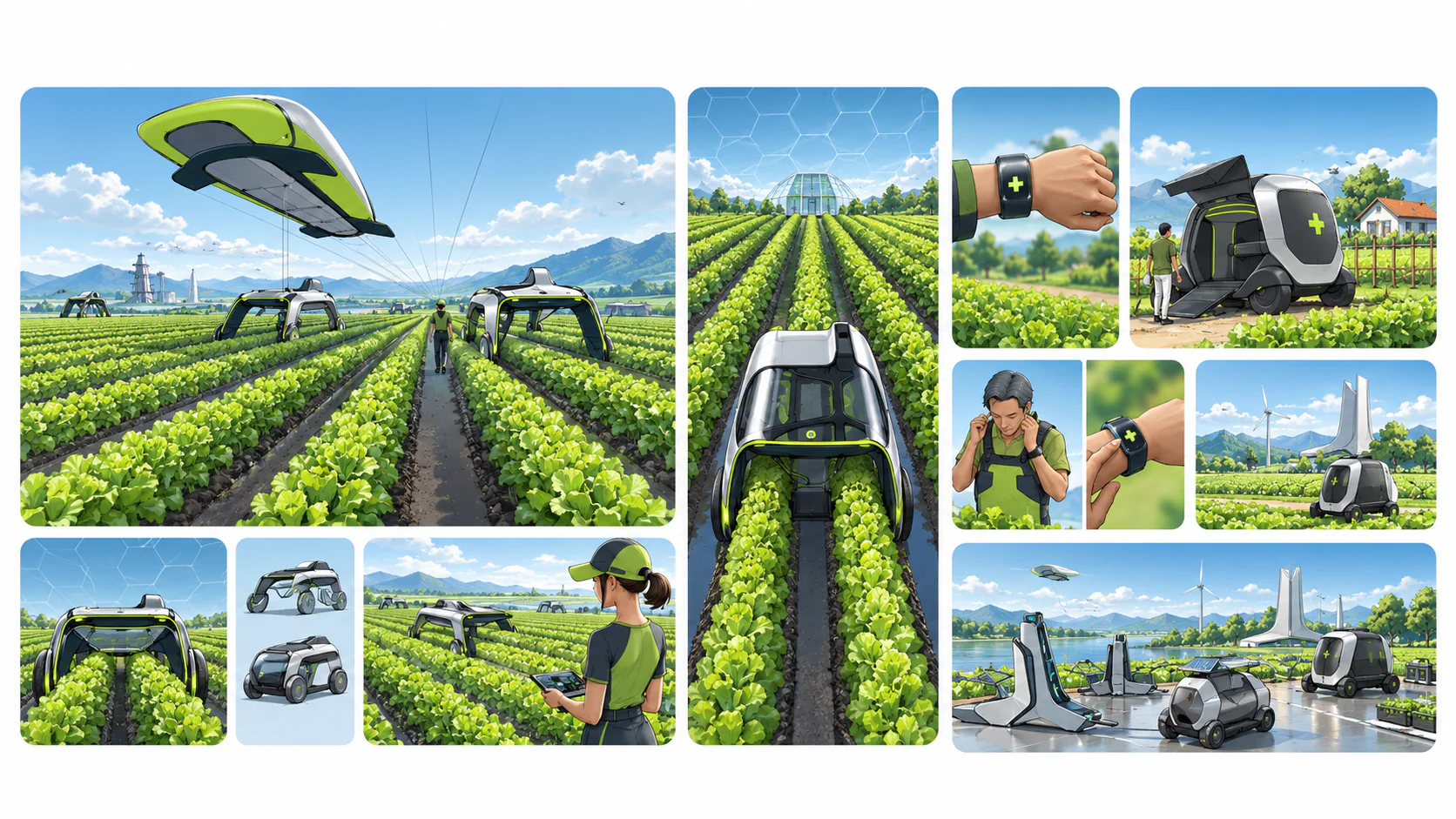
The autonomous medical cabin is conceived as part of a wider healthcare ecosystem rather than as an isolated vehicle.
Preparation, preventive examination, mobile treatment and connection to further medical support become parts of one continuous service journey.
Guided Diagnostic Journey
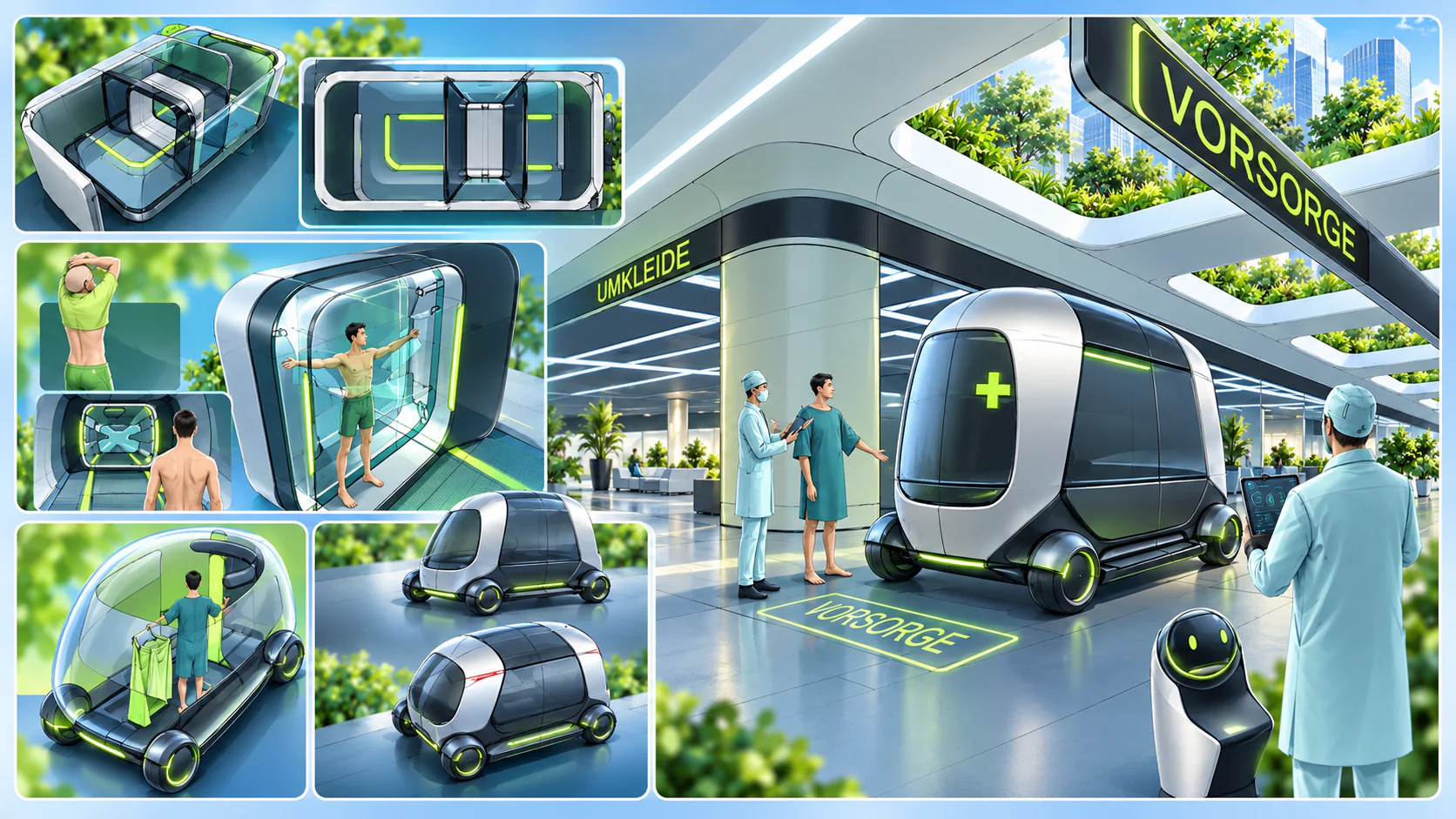
Inside the cabin, the check-up follows a guided sequence of interactions: preparation, health questions, eye, respiratory and blood-related tests, followed by ECG and body scanning.
The workflow translates multiple examination procedures into one compact mobile medical environment.
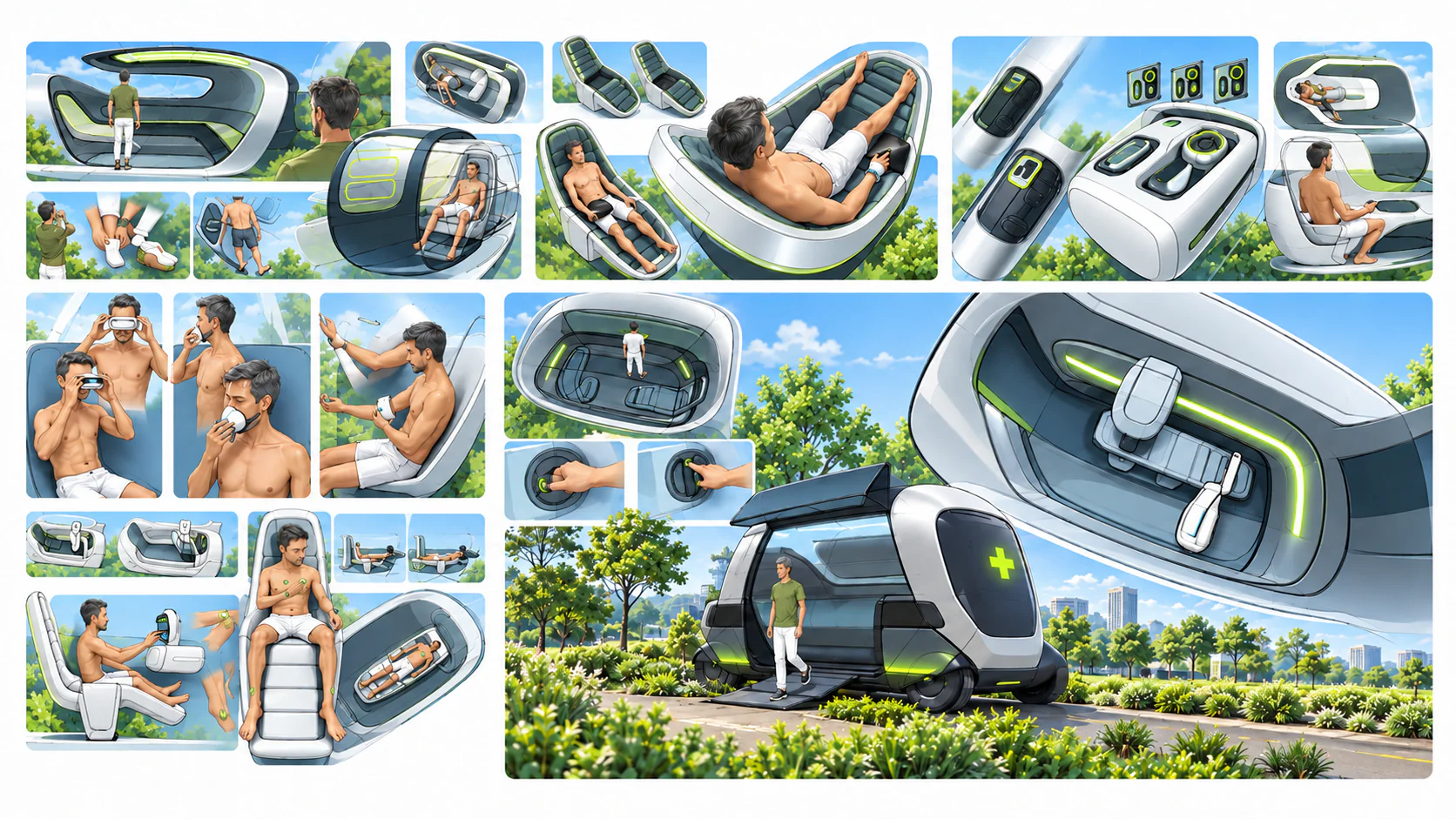
A Space That Adapts to the Patient
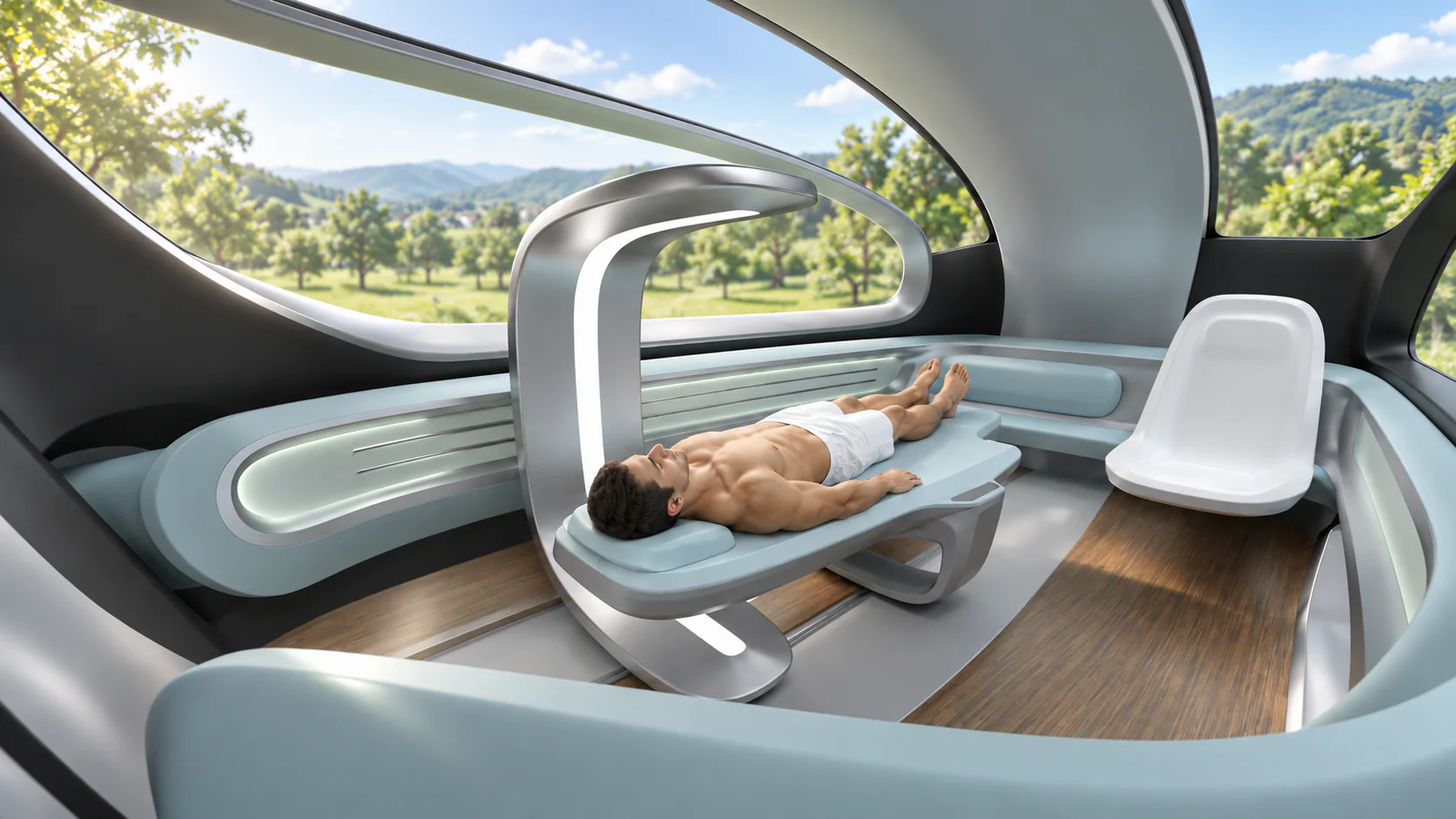
The interior supports different examination states without requiring the patient to move between separate rooms.
Seating position, body posture and integrated equipment work together so successive stages of the medical check-up can take place within the same compact space.
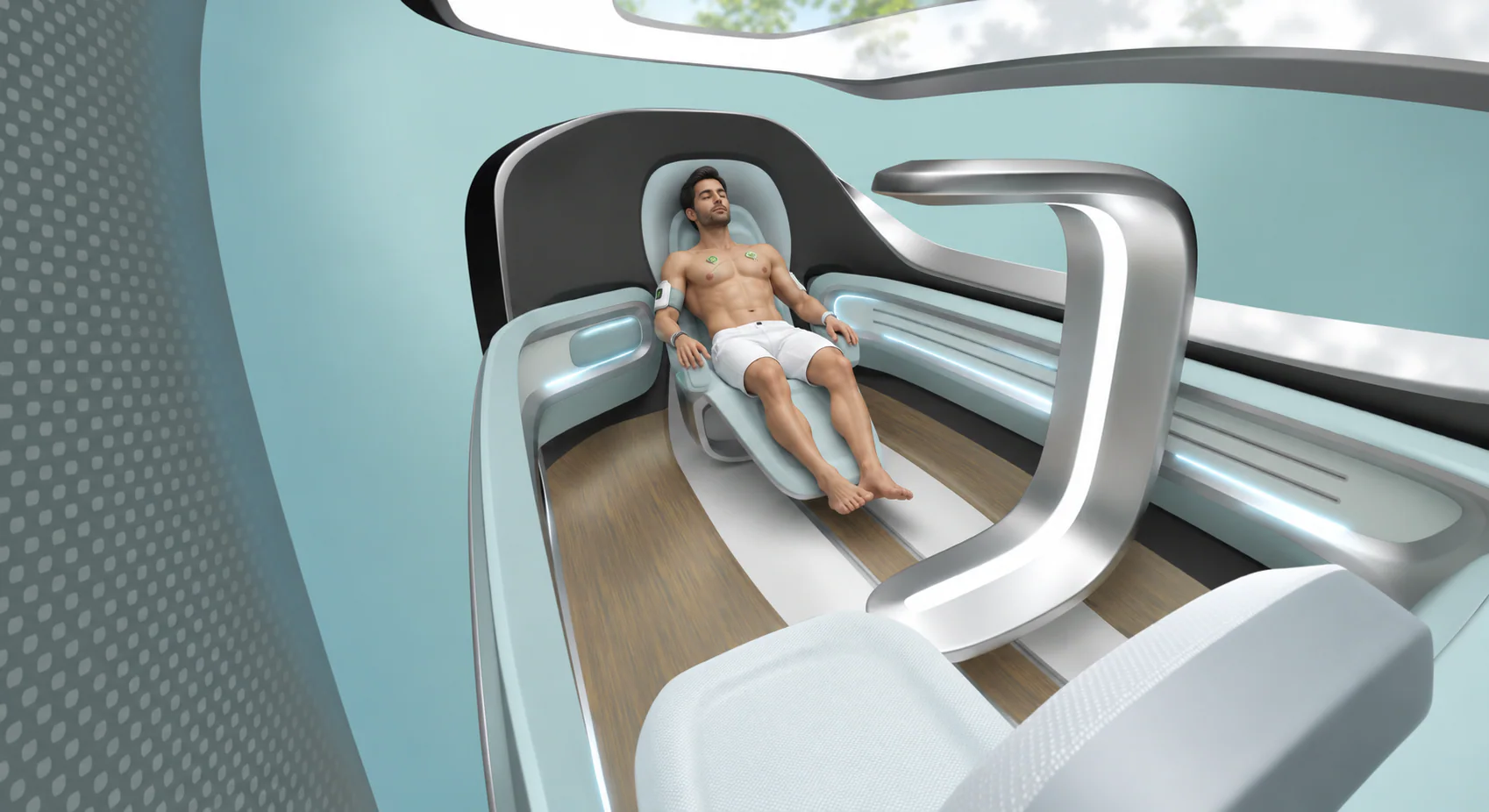
Diagnostics Within Reach
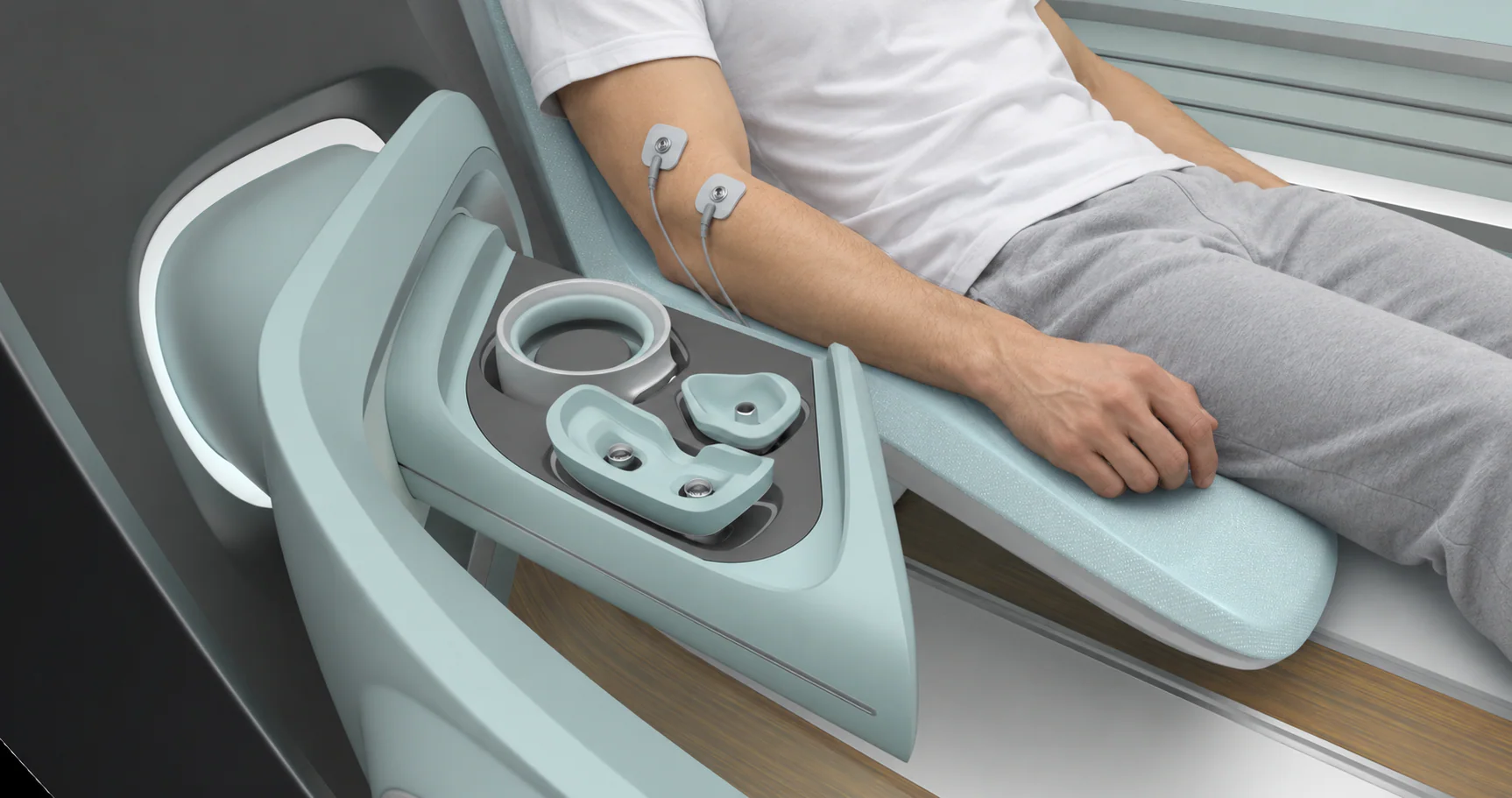
Diagnostic tools and sensors are integrated directly into the seat-side interior architecture.
Frequently used equipment remains within immediate reach of the patient, reducing unnecessary movement and making the interior itself part of the examination workflow.