Refillable Household Fire Extinguisher
An experimental household fire-extinguisher concept exploring user refillability through two product typologies: a shoulder-carried system and a compact handheld unit.
Refillable by Design
Developed within a university studio themed “Fire”, the project explores a household extinguisher that can be refilled using easily accessible ingredients.
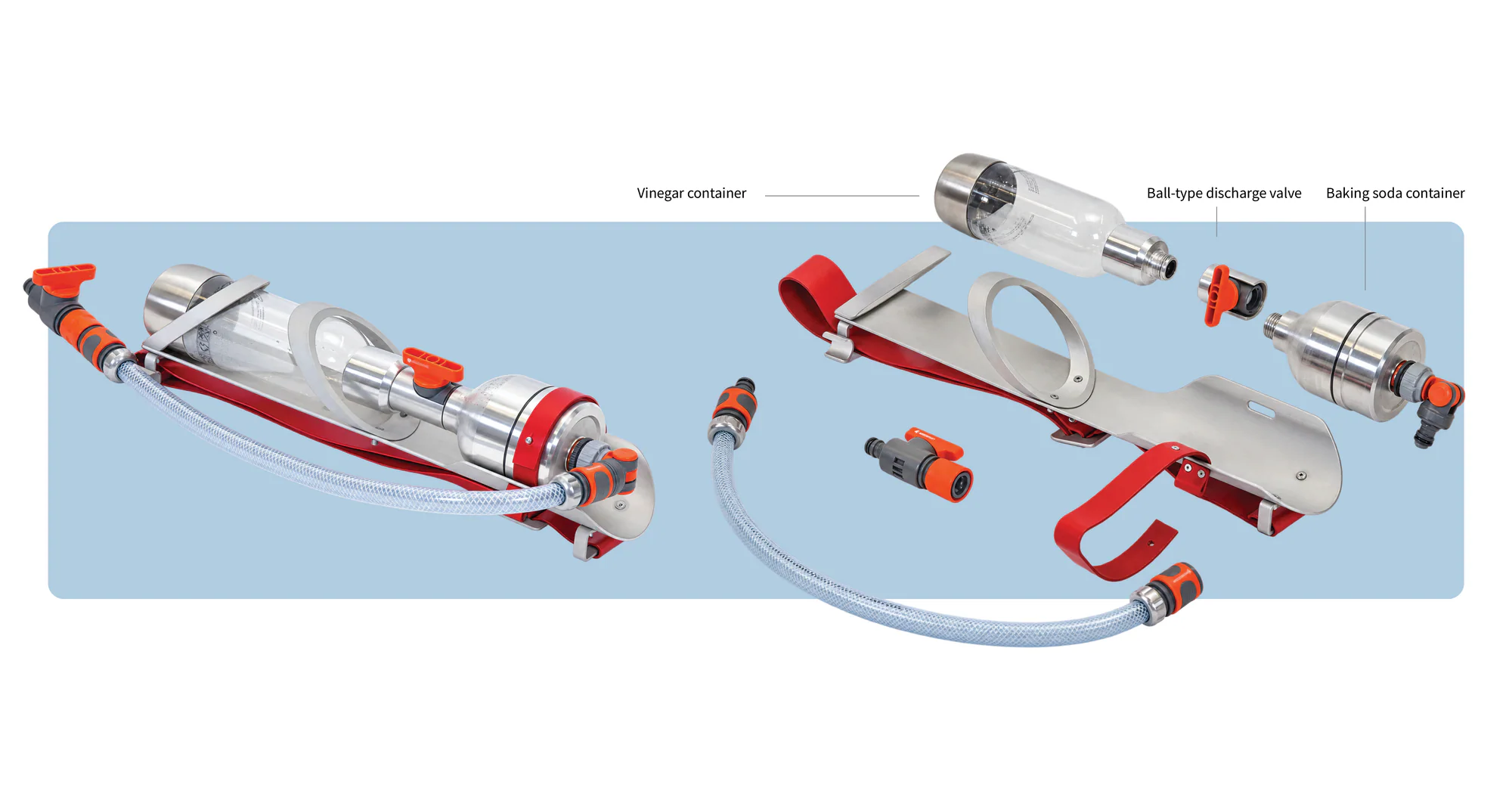
The concept revisits the historical soda-acid principle: a vinegar-based solution and baking soda react to generate CO₂ pressure, which supports the discharge stream.
The project investigates refillability and product interaction rather than proposing a contemporary certified fire-safety system.

Shoulder-Carried System
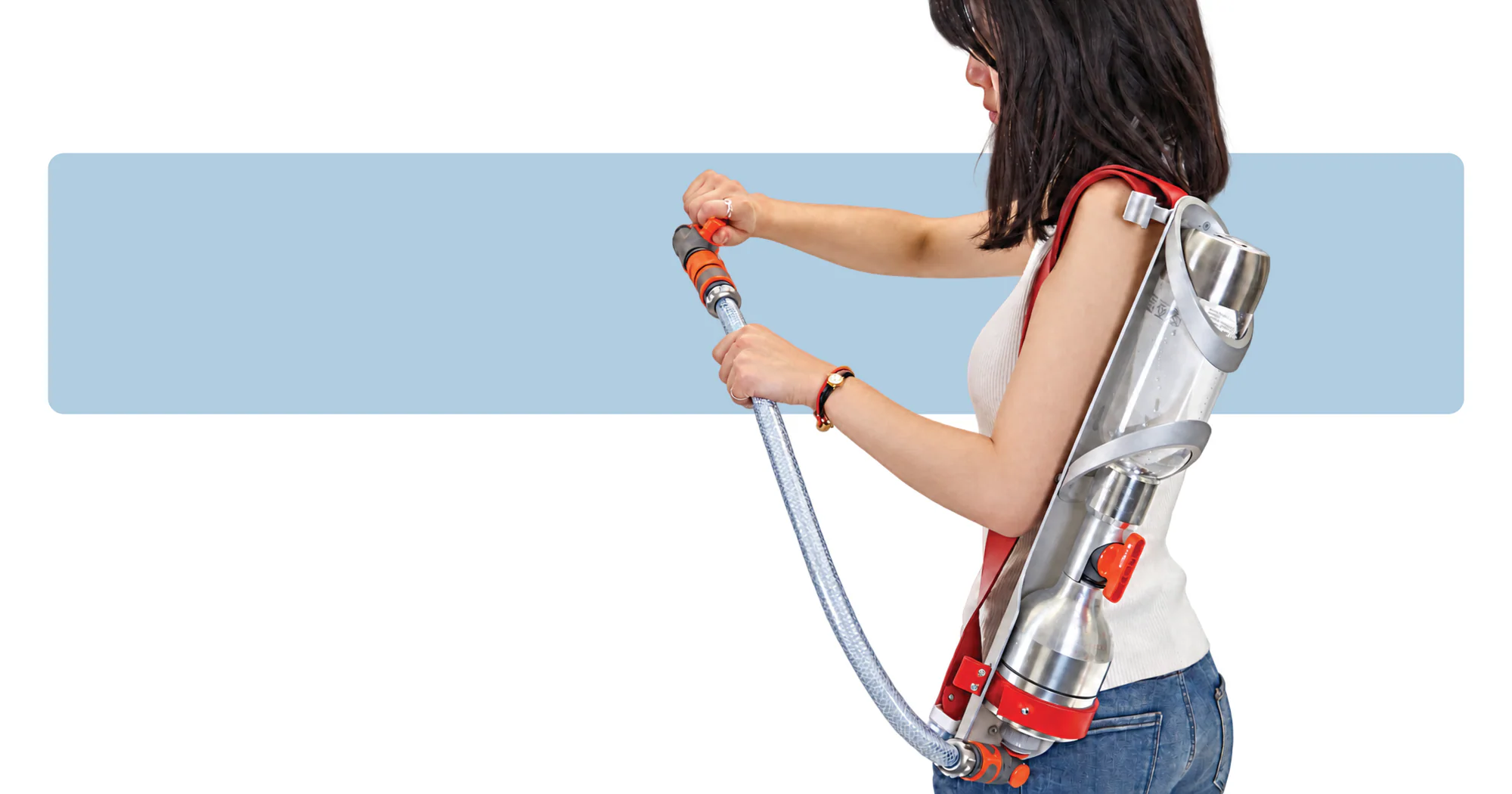
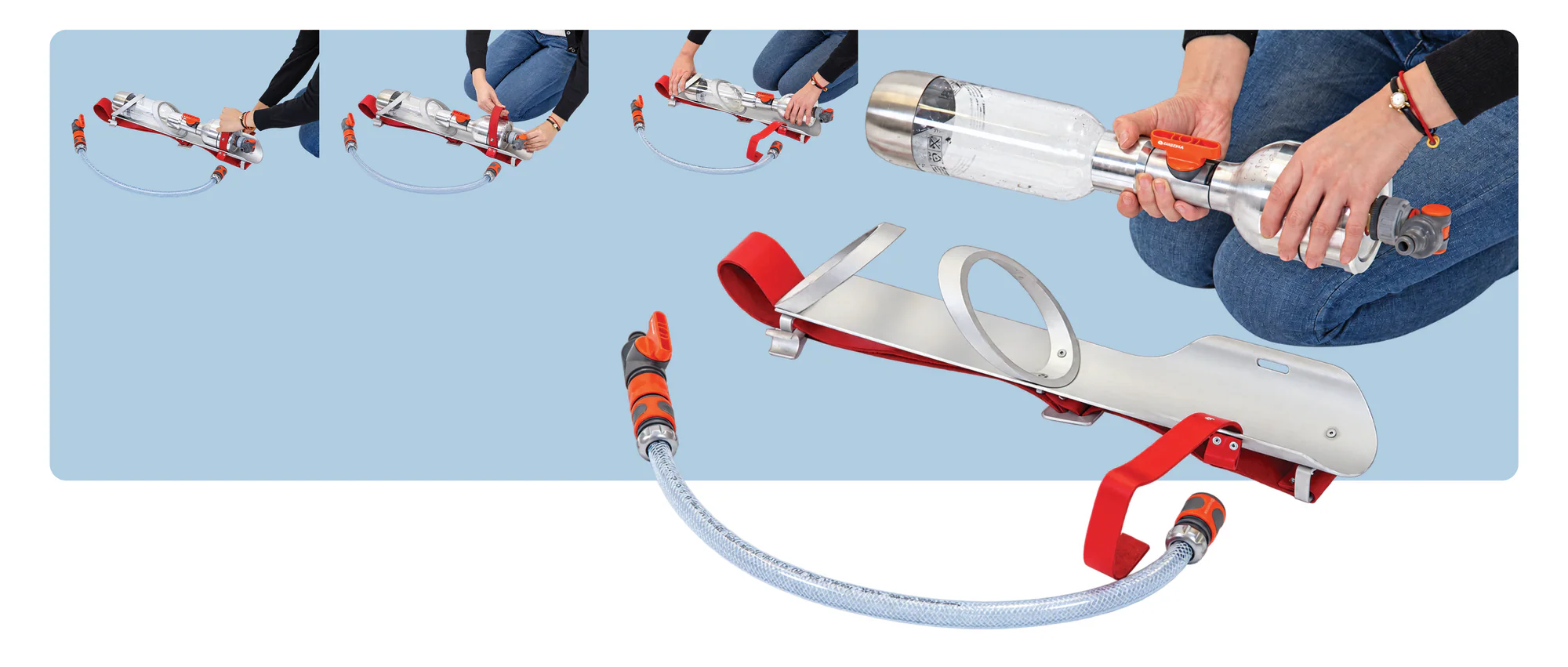
The shoulder-carried configuration combines the chemical containers, valves and discharge hose within a wearable support structure.
The system is designed to be opened, refilled and reassembled by the user, making the internal operating logic visible and accessible.
Handheld System
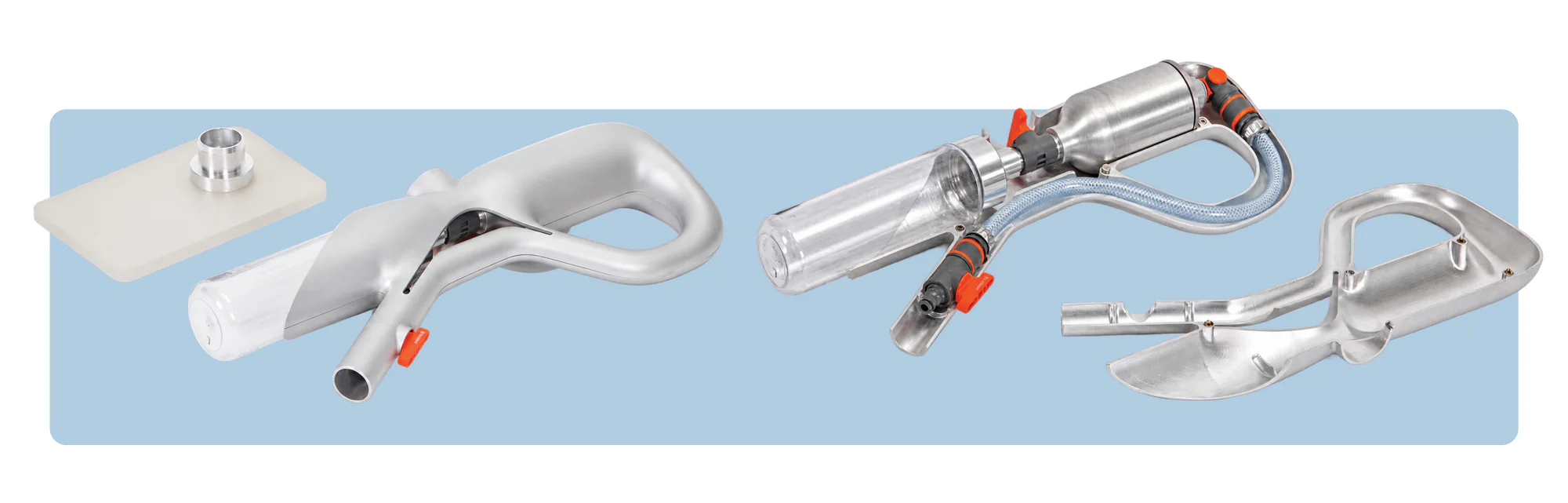
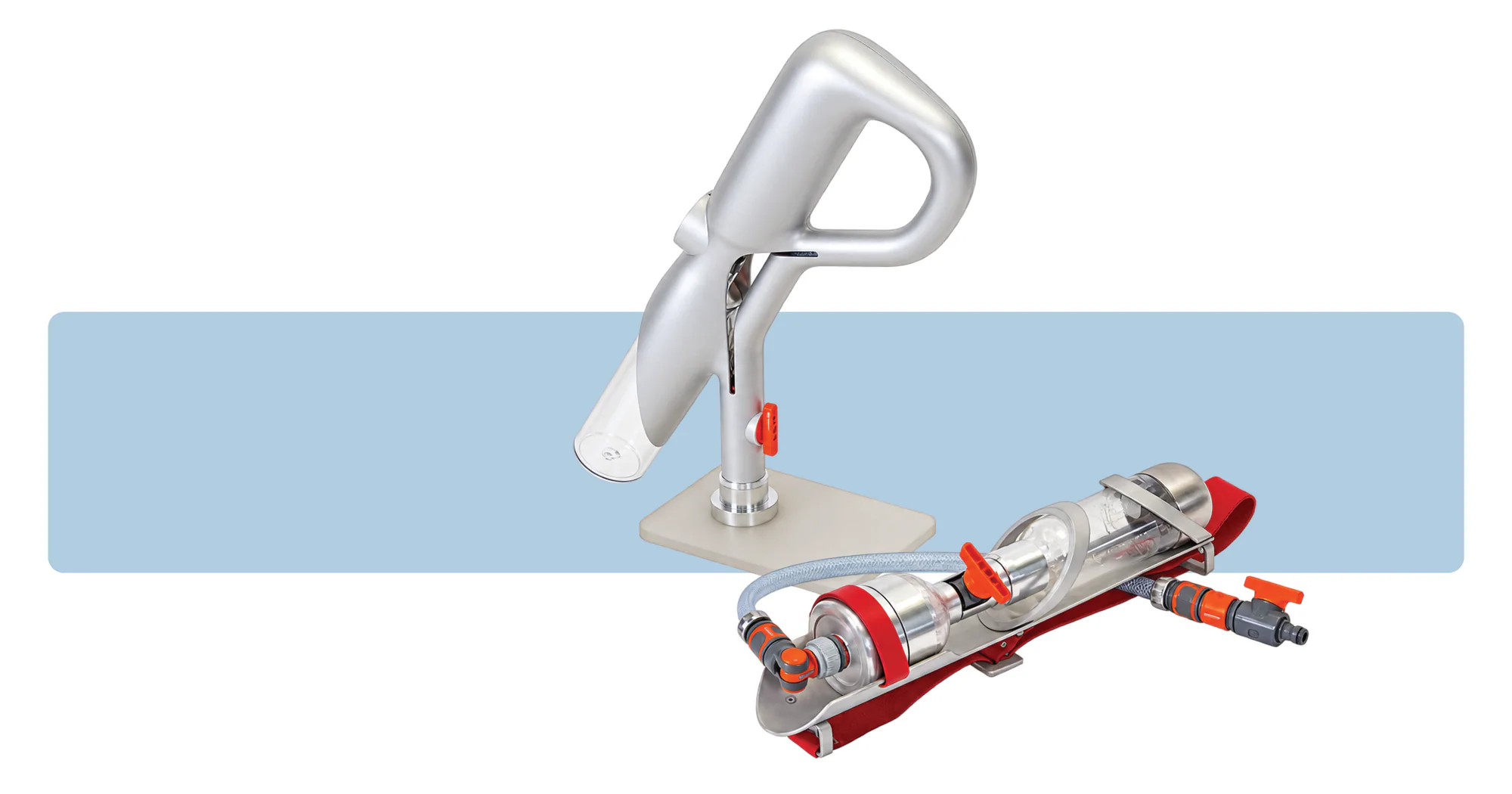
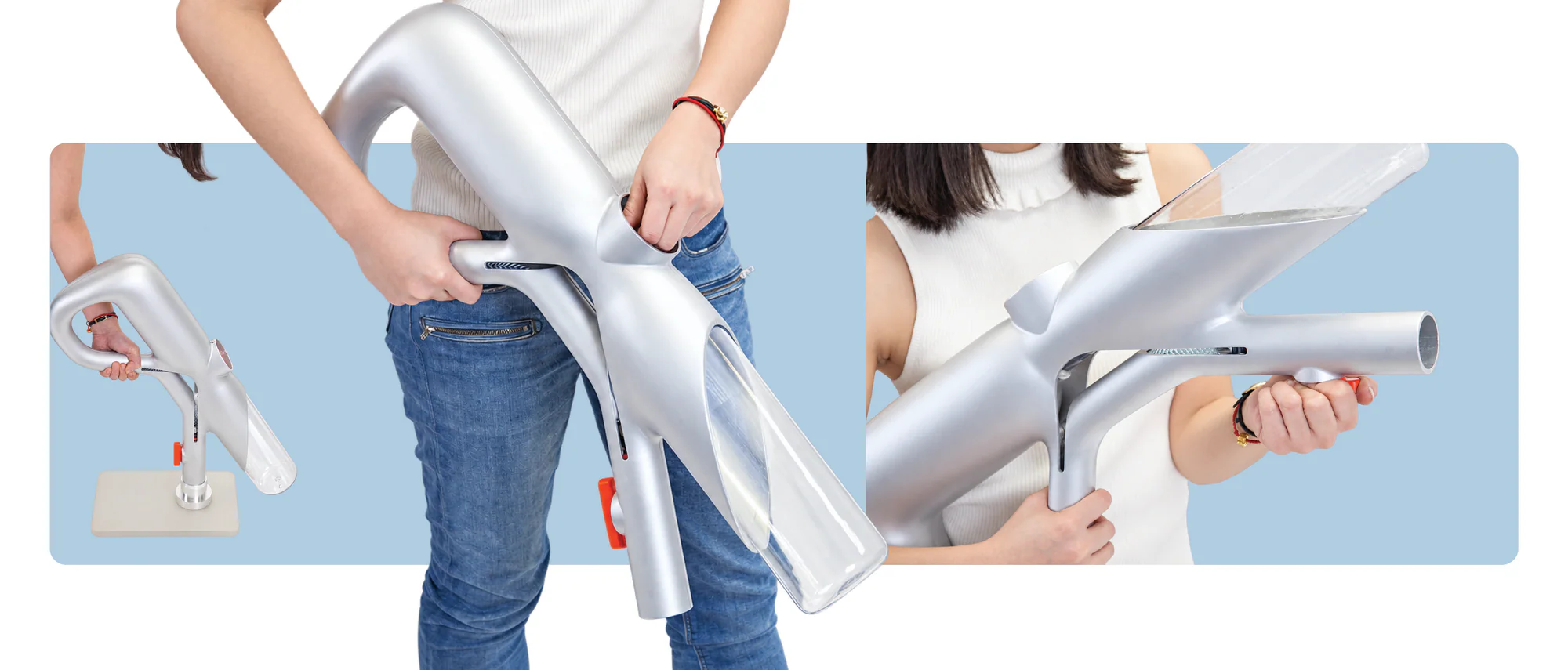
A second configuration translates the same operating principle into a more compact handheld form.
The interaction is reduced to a short sequence: remove the unit, release the two agents to initiate the reaction, then open the discharge valve.

Internal Architecture
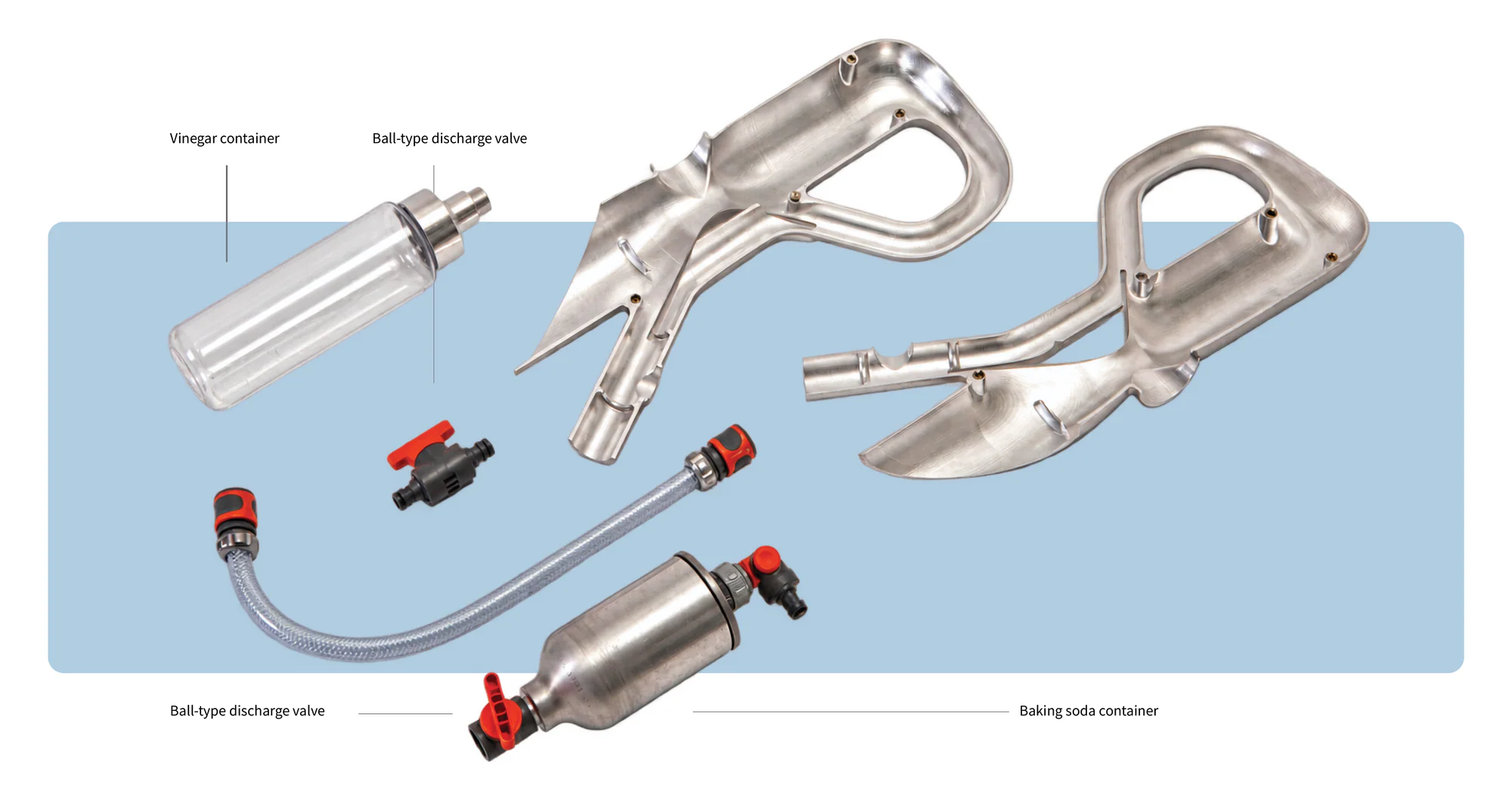
The internal components were measured and reconstructed at 1:1 scale in Rhino before the external housing was developed around the resulting package.
For the handheld version, the housing is divided into two magnetically connected shell halves, allowing direct access to the internal components.
Standard garden-hose connectors were integrated as practical liquid-tight prototype interfaces. The handheld housing was digitally modelled by Li Yin and externally CNC-machined, while the shoulder-carried prototype was fabricated manually in the university workshop.