
Experimental Folding Bicycle
A structural exploration of a compact folding bicycle.
This self-initiated university project explored how the frame, drivetrain and folding mechanism of a bicycle could be reorganized into a compact structural system. The project developed from sketch studies into a 1:2 physical model and later full-scale design visualizations.
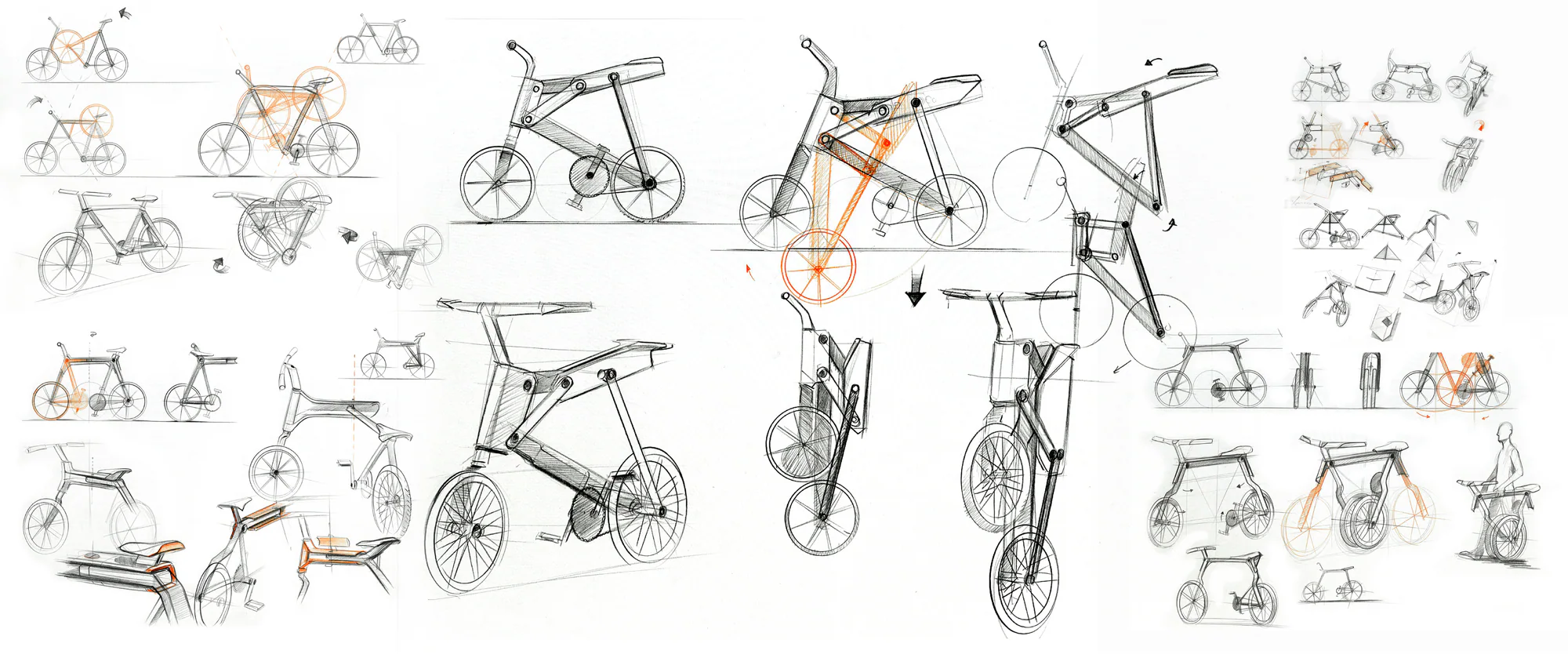
Exploring the folding architecture
The project began as an open structural study. Sketches tested different frame geometries, pivot positions and folding sequences, with the aim of reducing the bicycle into a compact mechanism without losing a recognizable riding configuration.
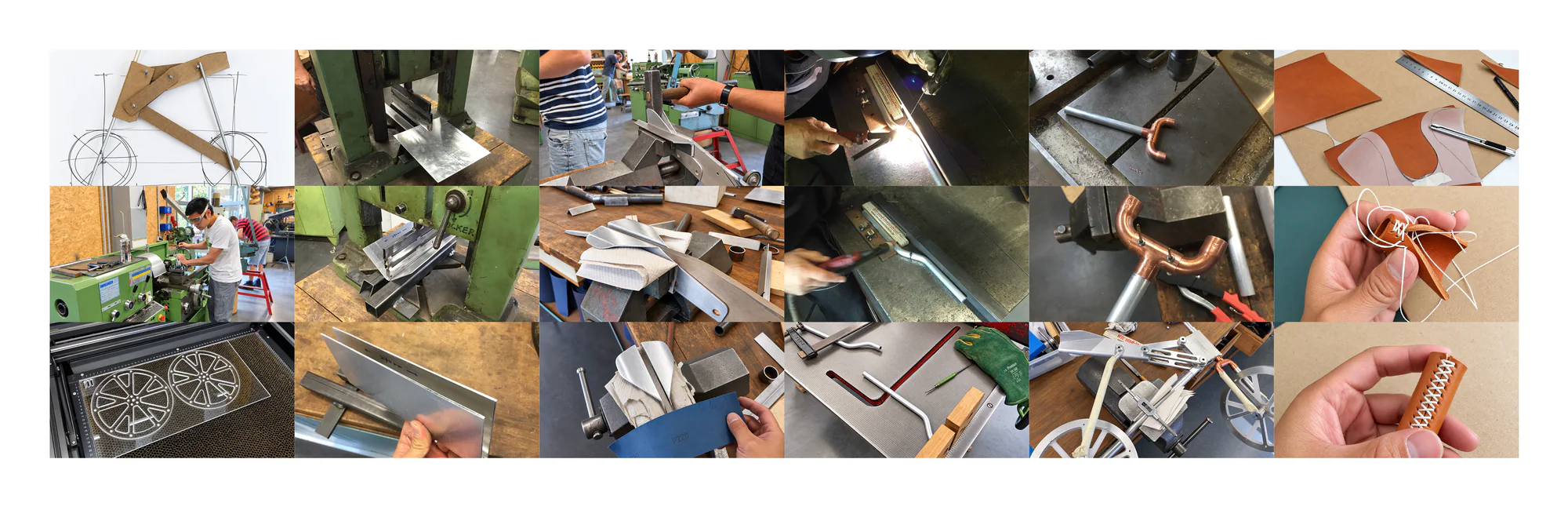
Testing the structure physically
A 1:2 physical model was built to examine the proportions, linkage positions and spatial relationships that were difficult to judge in drawings alone. Aluminium parts, handmade components and temporary fittings were used to translate the mechanism into a tangible object.
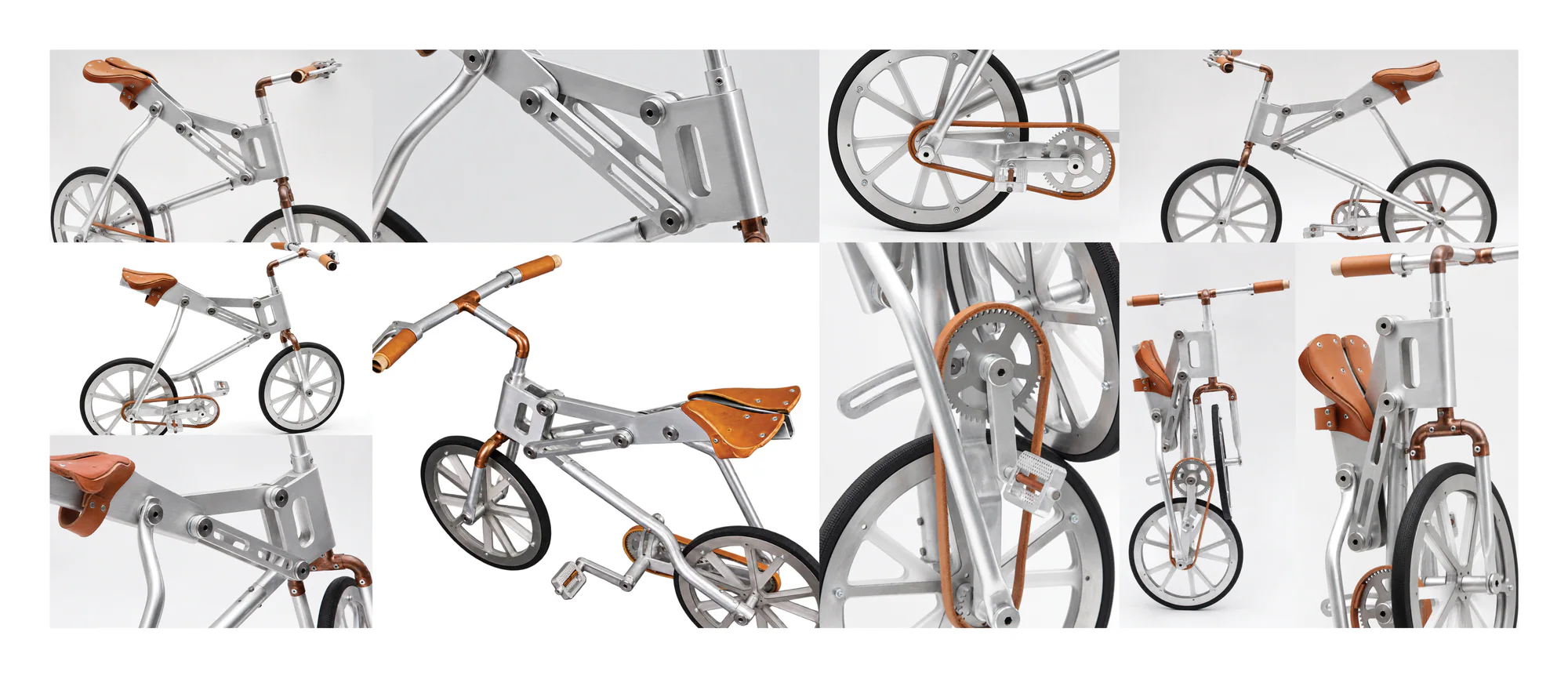
Documenting the 1:2 model
The 1:2 physical model made it possible to assess the concept’s proportions, pivot points and spatial relationships. The photographic documentation presents the object as a built study, making its materiality, connections and structural logic directly legible.
From physical model to full-scale visualization
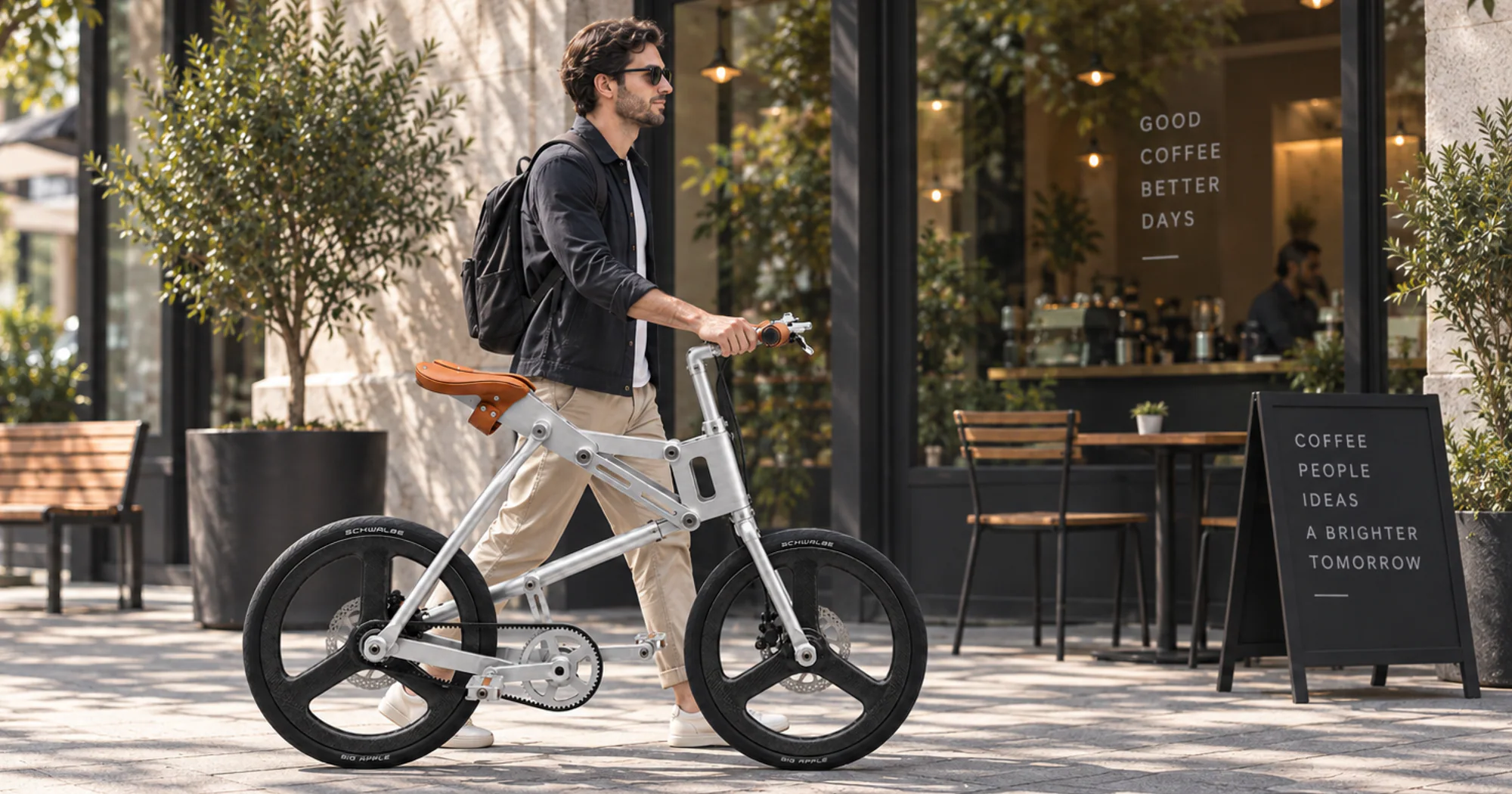
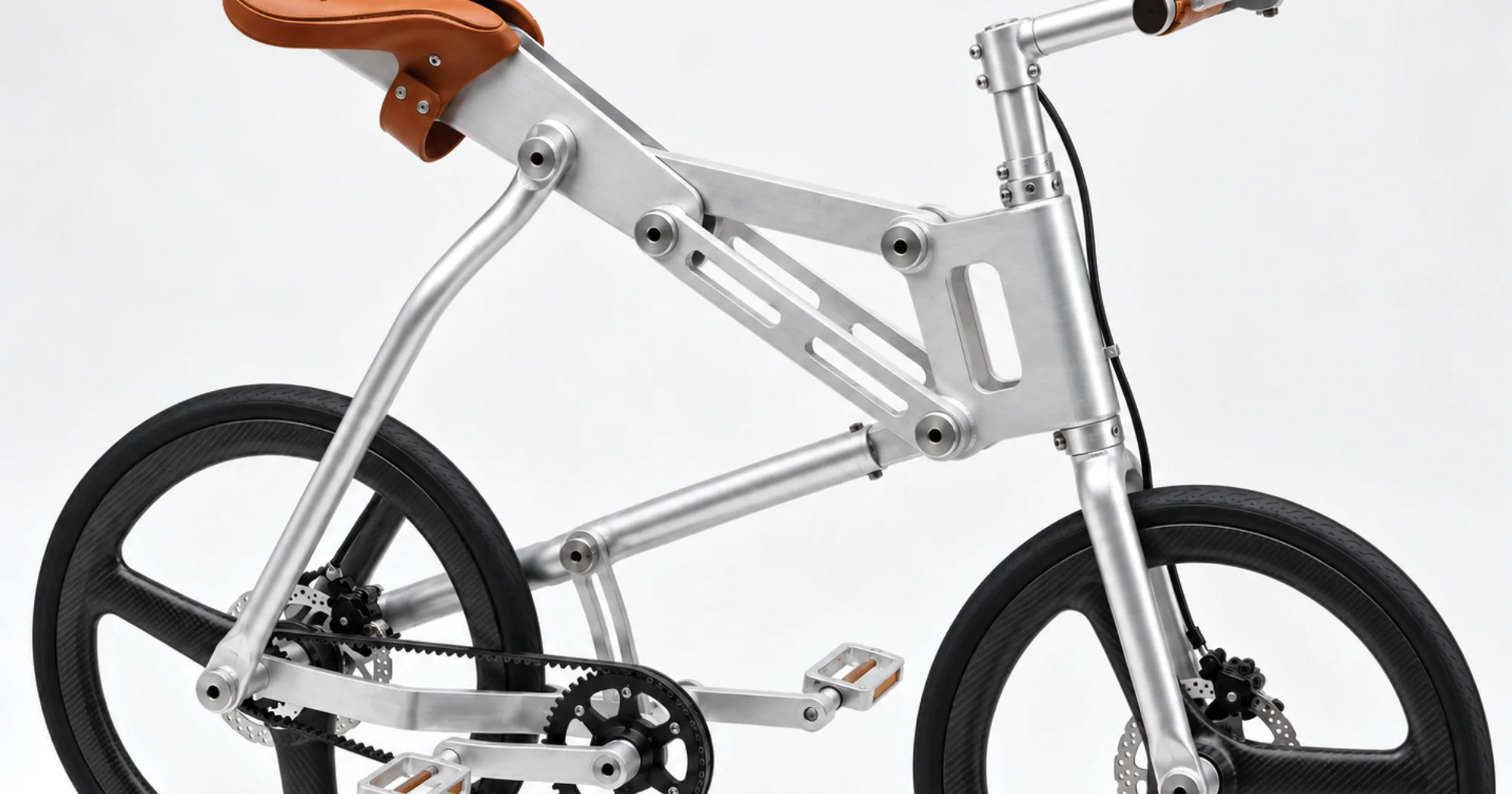
The physical model established the geometry and mechanical character of the concept. In later visualizations, the same design was translated toward a realistic full-scale bicycle, using refined aluminium construction, belt drive, carbon three-spoke wheels and production-oriented component detailing.
Developing the product character
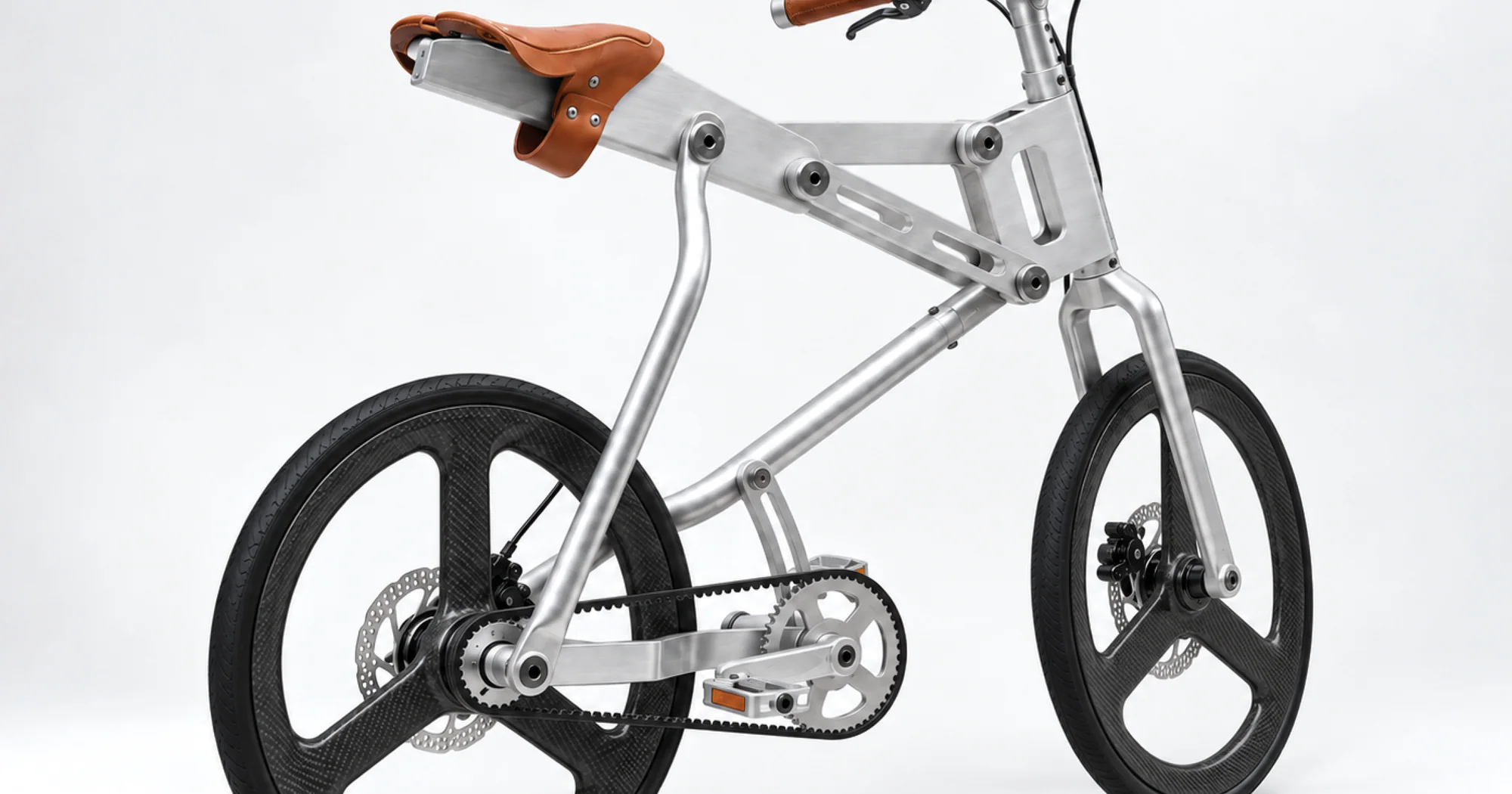
Using the same structure, the concept was developed in a further visualization as a more product-oriented bicycle study. Refined aluminium surfaces, belt drive, carbon three-spoke wheels and more precise component details sharpen the idea of a possible real-world execution.
One structure, multiple states
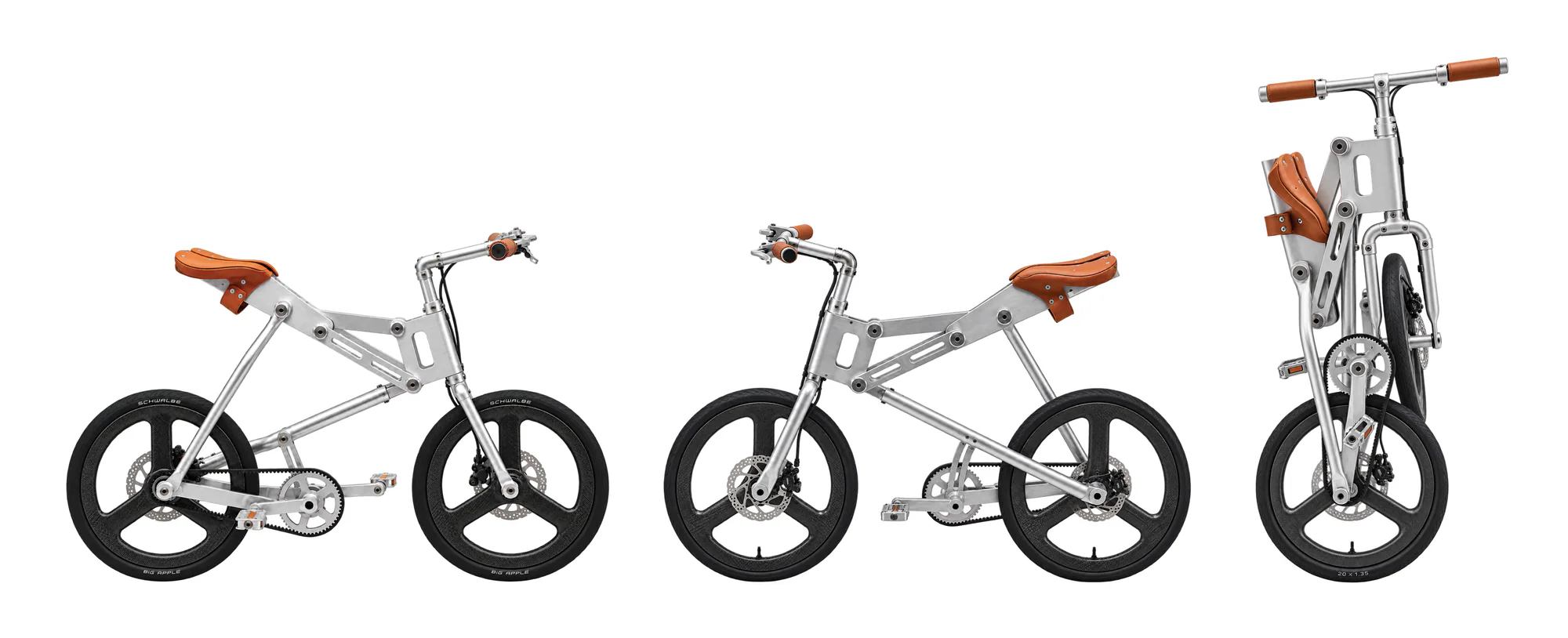
The design was conceived as a three-dimensional folding system rather than a conventional bicycle frame with an added hinge. The side views and folded configuration show how the main members, pivots and wheel positions work together across different states.
Understanding scale through use
Placed in an everyday pedestrian environment, the concept can be read at human scale. The compact wheel format and elongated frame create a distinctive relationship between rider, bicycle and surrounding space.
Concept visualization